

American water utilities collectively lose an estimated $7.6 billion every year to water they treat, pump, and distribute but never bill for. (AWWA) That figure does not include the additional revenue lost to billing errors, estimated reads, and meter inaccuracy. For a mid-sized utility managing 25,000 to 50,000 meters, the combined gap between what you produce and what you collect can represent hundreds of thousands of dollars annually and most of it is fixable.
Revenue leakage is not one problem. It is three separate problems that most billing teams are managing reactively, one complaint at a time. This guide breaks down each root cause and shows how water utility software addresses all three in a structured, measurable way.
Revenue leakage at a water utility refers to the gap between the volume of water a utility produces and the revenue it actually collects. It occurs through three distinct channels: physical water loss (non-revenue water), billing errors from manual or estimated processes, and meter inaccuracy. All three reduce the revenue a utility rightfully earns from the water it treats and delivers.
Understanding which of these three channels is driving your specific revenue gap is the first step to fixing it. Each has a different root cause, a different financial signature, and a different software solution. Treating them as one undifferentiated problem is why many utilities make incremental improvements but never close the gap completely.
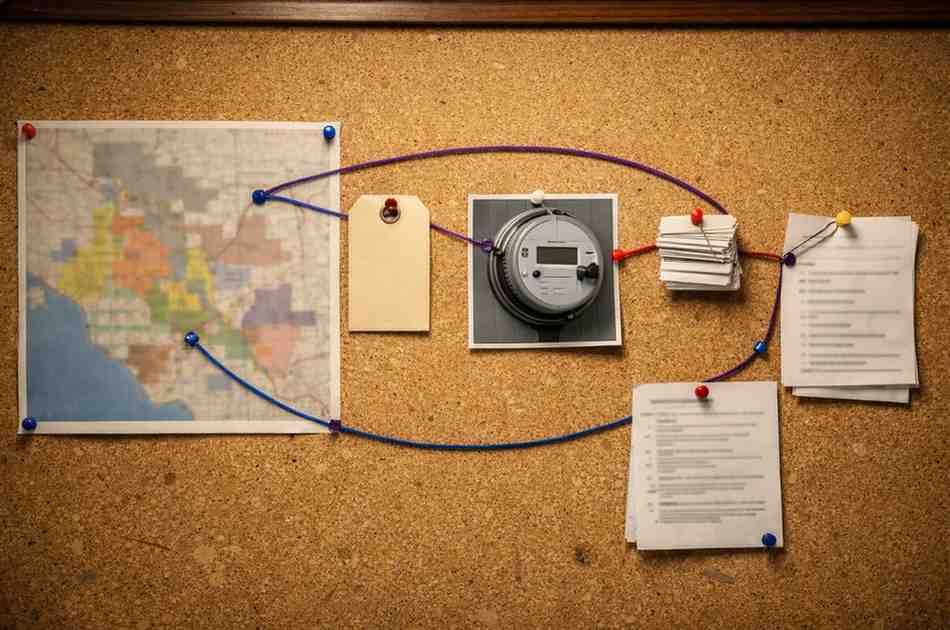
Every dollar your utility fails to collect traces back to one of three sources:
1. Physical water loss (non-revenue water) - water that enters your distribution system but is never billed because it leaks from aging mains and service lines, is consumed for flushing and fire suppression without metering, or is taken illegally through unauthorized connections.
2. Billing errors - revenue lost through incorrect meter reads, misapplied rate structures, estimated bills that are never corrected, and manual reconciliation backlogs that turn billing disputes into write-offs.
3. Meter inaccuracy - aged or malfunctioning meters that systematically under-read consumption, meaning customers are billed for less water than they actually use, a slow, invisible drain that compounds over time.
Each of these categories contains distinct sub-problems. The operational response to a distribution main leak is entirely different from the operational response to a billing exception backlog. Software that addresses all three in an integrated platform is the difference between patching individual symptoms and fixing the underlying system.
Non-revenue water (NRW) is defined as the volume of treated water that a utility produces but does not bill for, encompassing both physical losses and apparent losses. According to the American Water Works Association (AWWA), US water utilities average a 16% NRW rate, with many older systems exceeding 30%. Every percentage point above your target benchmark represents direct financial loss.
NRW breaks into two categories that require different responses:
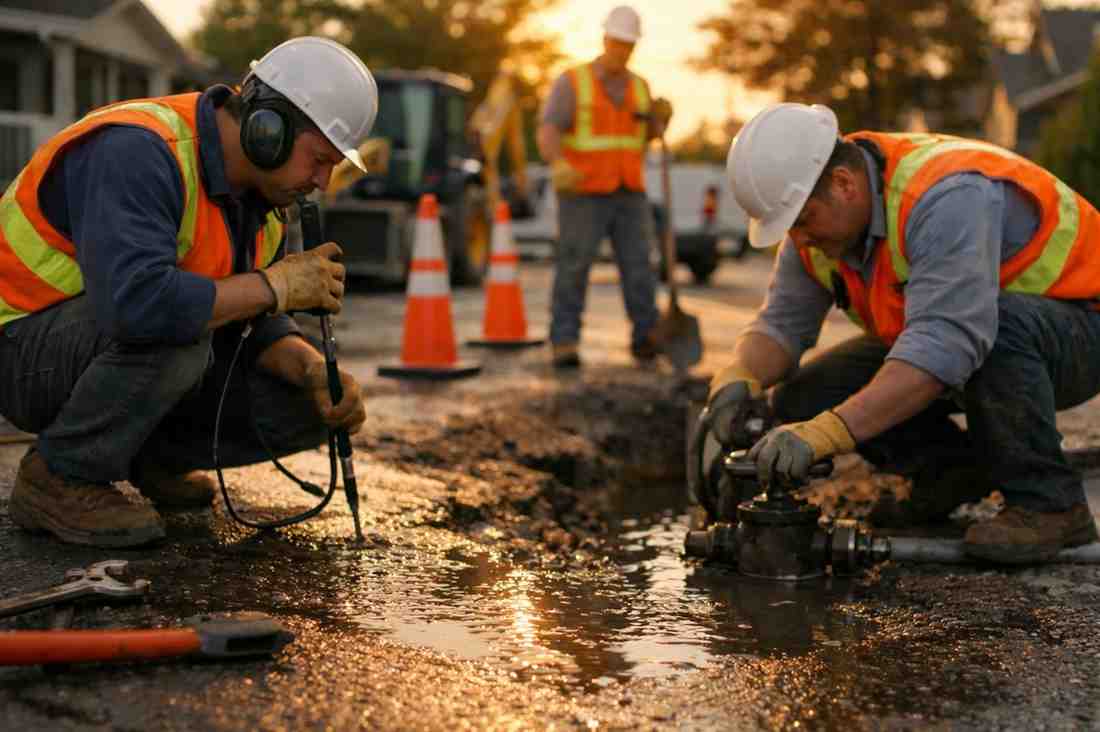
• Real losses - physical leakage from mains, service connections, and storage tanks. The ASCE 2021 Infrastructure Report Card estimates the US has approximately 240,000 water main breaks per year, each releasing treated water directly into the ground. Real losses require infrastructure investment and work order response, but software enables you to detect them faster through consumption pattern anomalies and GIS-integrated leak mapping.
• Apparent losses - water that is delivered to customers but not accurately metered or billed. This includes meter under-registration, data handling errors in meter reading, and unauthorized consumption. Apparent losses are not infrastructure problems, they are data and billing problems, and they are fully addressable through software.
For a 30,000-meter utility with an annual production volume of 3 billion gallons, a 16% NRW rate represents 480 million gallons of unrecovered water. Even if only 30% of that is apparent losses (the billing and metering component you can fix without pipe replacement), that is 144 million gallons that software could help you bill for correctly.
Billing errors are the most underreported form of water utility revenue leakage because they rarely trigger a formal financial audit. The water was delivered. The meter may have been read. A bill was produced. Itis just that the bill was wrong and without an automated exception detection system, no one knows until the customer complains.
The most common billing error sources in mid-sized utilities:
• Estimated reads that are never corrected. When a meter reader cannot access a property, the read is estimated based on prior consumption. If the correction cycle breaks a common occurrence in utilities with manual billing workflows, the estimated bill becomes a permanent record, and the gap between estimated and actual usage becomes either unbilled revenue or future dispute.
• Rate misapplication. Complex tiered rate structures, multi-family dwelling calculations, and seasonal rate adjustments are difficult to apply consistently without automated rate engine logic. Manual rate application creates systematic billing errors that repeat across entire customer segments.
• Exception backlog. Billing anomalies, unusually high consumption, unusually low consumption, zero reads, generate exceptions that need resolution. In a manual workflow, exception queues grow faster than billing teams can work through them. Unresolved exceptions become either under billings (revenue leakage) or overbillings (customer disputes and refunds).
Utilities that replace manual exception management with automated billing cycle logic and anomaly detection report up to 50% improvement in billing accuracy, measured in reduced exception volume, lower dispute rates, and decreased revenue write-offs. That improvement does not require a full system replacement; it requires a billing platform with built-in exception flagging, automated rate engine processing, and a clear audit trail from meter read to invoice.
When your water utility billing software runs the billing cycle, exception management, and customer dispute workflow in a single integrated environment, rather than across spreadsheets, legacy CIS, and email chains, billing errors become visible and resolvable before they become revenue losses.
A meter that under-reads by 3% is not a billing error. It isa meter performance problem, and it is costing your utility money every single billing cycle until you detect and replace it. The average residential water meter has a service life of 15–20 years; many US utilities are running fleets well beyond that range, with accuracy degradation that is invisible until metered consumption data is compared against production figures.
Meter inaccuracy compounds the NRW problem. A meter that consistently reads low generates apparent losses that show up in your NRW calculation without triggering any customer complaint. Unlike a billing error, the customer never overpaid, they received accurate service at an understated consumption level. The revenue was genuinely lost.
Advanced Metering Infrastructure (AMI) and Meter Data Management (MDM) software close this gap. Meter data management for water utilities processes incoming AMI reads through Validation, Estimation, and Editing (VEE), a systematic protocol that flags reads outside statistically expected ranges, identifies zero-read meters, and automatically routes anomalous data for field investigation. Systems that integrate directly with AMI hardware from Sensus, Itron, and Landis+Gyr through pre-built connections eliminate the manual data transfer step where errors are most often introduced.
For utilities still operating AMR (drive-by) meter reading systems, MDM also enables meter performance reporting, identifying which meters in your fleet are statistically under-performing and prioritizing them for replacement based on estimated revenue recovery, not just meter age. That is a data-driven capital planning decision that most utilities currently make on gut feel and budget availability.
Each of the three revenue leakage sources, physical NRW, billing errors, and meter inaccuracy, has a corresponding software capability that addresses it. The distinction between legacy utility software and modern cloud-native platforms is whether those capabilities are integrated and talk to each other, or whether your billing team is still manually connecting dots between three separate systems.
The water utility management software that mid-sized utilities need does not have to cost what enterprise platforms charge. SMART360 is built on a pay-per-meter pricing model, meaning a 20,000-meter utility pays for 20,000 meters, not a six-figure license fee designed for a 500,000-meter IOU. The billing module, MDM integration, NRW analytics, and work order management are all available in a single SaaS platform with 25+ pre-built integrations to existing AMI hardware and payment gateways.
For utilities that have accepted revenue leakage as a structural fact of operations, the question is not whether software can fix it. It is how much longer the current approach will continue to be affordable.
According to the American Water Works Association (AWWA), US water utilities average a non-revenue water (NRW) rate of approximately 16% of total water produced. Many older systems in the Northeast and Midwest exceed 30%. The EPA recommends utilities target an NRW rate below 10%. The gap between your current rate and that benchmark represents recoverable revenue.
The most common causes are estimated meter reads that are never corrected, rate misapplication in tiered or seasonal billing structures, and exception backlogs in manual billing workflows. When billing exceptions, unusually high or low consumption, zero reads, negative reads, are not resolved before bill production, they generate either under billings (revenue leakage) or overbillings (customer disputes and refunds).
Advanced Metering Infrastructure (AMI) removes the estimation and manual data transfer steps that introduce most billing errors. When AMI reads are processed through a Meter Data Management (MDM) system with Validation, Estimation, and Editing (VEE) logic, every read outside expected parameters is automatically flagged before it reaches the billing cycle, eliminating the class of billing errors that stem from bad meter data reaching the invoice stage.
Yes. Modern SaaS utility platforms use per-meter pricing rather than fixed enterprise license fees, making NRW analytics, automated billing exception management, and MDM integration accessible to utilities with 5,000 to 100,000meters. The revenue recovered from reducing billing errors and apparent losses typically covers the platform cost within the first operating year, making it a financially self-funding investment.